About
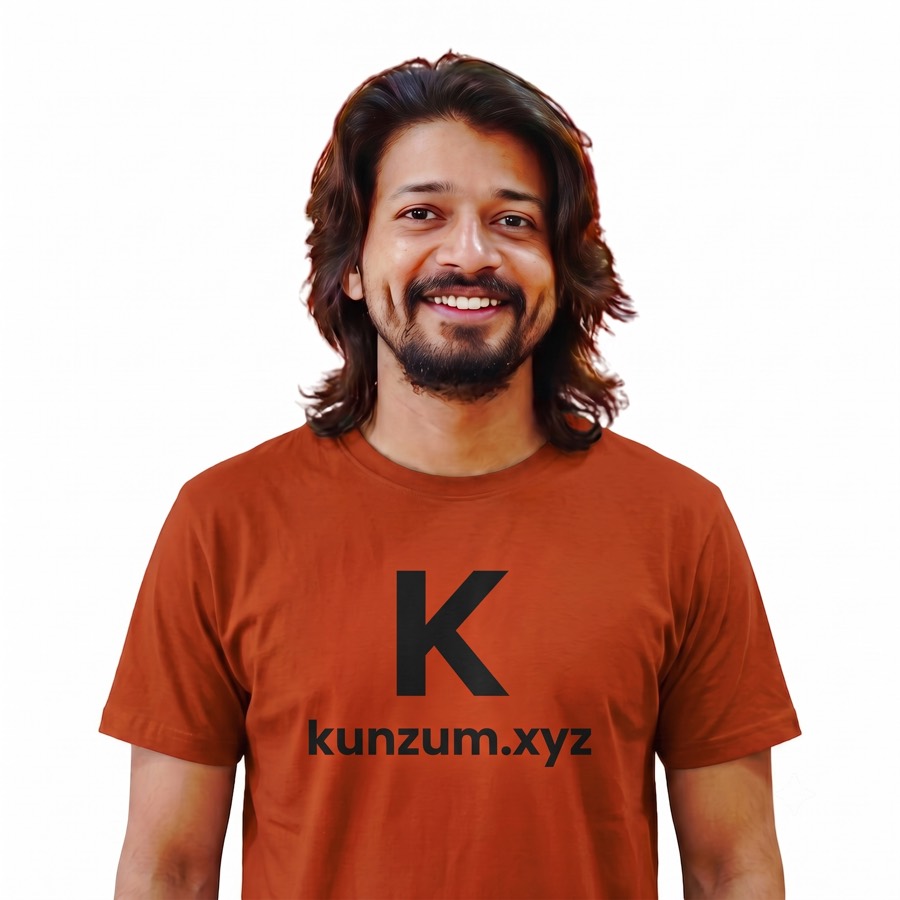
Narender Charan
I run Kunzum, an AI search visibility studio for crypto. One operator, hands-on, doing the work. There is no account layer and no team you never meet.
Six years in crypto, from inside it
I have spent six years marketing crypto products from inside the market rather than from an agency floor. Positioning, content, go-to-market, launches, and the community work that actually moves numbers. Answer engines are the sharp end of that, not all of it.
The reason I ended up specialising here is unglamorous. I kept watching teams do everything right and still lose deals to competitors, with nothing in the analytics to explain it. No click to log, no impression, no session. The buyer had asked a model, got three names, and none of them was the client. That is not a campaign problem. It is a retrieval problem, and almost nobody in crypto was treating it as one.
What that actually buys you is comprehension. A perpetual DEX is not an exchange with extra steps. A yield protocol either has a real source of yield or a token subsidy, and buyers can tell which. A zero-knowledge proof is not advanced encryption. Those are the sentences a buyer reads to decide whether you know what you are talking about — and they are the sentences an AI engine lifts when it answers a question about your category. Most agencies will assign your protocol to someone who learns it from your brief and moves to a fintech account on Thursday. That produces pages which read exactly like what they are.
I work with a small number of clients at a time, because the work is writing and measurement rather than account management, and both of those are done by the same person. No account layer, no junior drafting your protocol page, no briefing loop before a paragraph can change. The longer version of that argument includes five questions you can use to test it on any agency, including me.
Also mine
What I publish
Kunzum publishes original research on what AI engines actually say about crypto categories, with the underlying data attached so the findings can be checked rather than trusted. The first edition put ten ordinary cross-border money problems to four engines and recorded 480 responses.
Two of its six pre-registered hypotheses failed, including the one the study was built around, and both are published as failures. One finding runs directly against the case I make commercially: AI warnings about crypto turned out to be more accurate than AI warnings about traditional finance. It is published anyway, because a report that only produces convenient findings is an advert.
The research feeds the commercial work directly: the categories with a published corpus behind them are stablecoin rails and crypto cards and neobanks, and what you can actually buy says plainly where I am the wrong choice.
All research · The raw dataset, ungated · How I work · Questions
Where to find me
Based in Manali, Himachal Pradesh, at 32.24° N 77.19° E. Working with clients worldwide.
The fastest way to start is a call. I run your questions across the four engines before we speak, so you are not spending twenty minutes explaining your protocol to a stranger.